


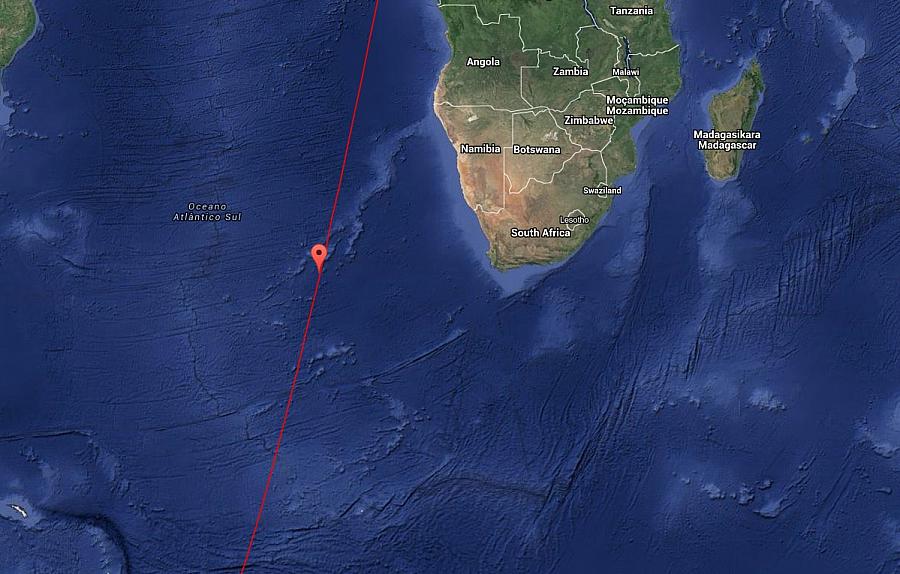
The Russian satellite Kanopus-ST with the Volga upper stage lost orbit and its pieces burned in dense atmosphere over the Atlantic on Tuesday, a high-ranking source in the Russian Aerospace Forces headquarters told TASS.
"The satellite together with the Volga upper stage entered the atmosphere over the southern part of the Atlantic this morning. They have fully burned in the dense atmosphere," the source said.
The Kanopus-ST satellite is a small remote sensing spacecraft. It enters a program that is operated in a dual-use fashion, delivering data for civilian and military applications.
According to documentation, Kanopus ST hosts a Microwave radiometer with a conical scanning geometry achieving a swath width of 2,200 Kilometers and a resolution of 12 to 160 Kilometers, and a multi-spectral imaging system covering the visible wavelengths across a 1,000-Kilometer swath, reaching a spatial resolution of 30 to 50 meters.
Comments made by Russian Military Officials in 2010 indicated that the Kanopus ST satellite would be capable of scanning the underwater areas for submarines, however, the published specifications would not permit such a detection. The relative lack of information on the satellite’s payloads and the secrecy surrounding its launch may suggest a more military-oriented role of the mission.


